

Let me ask you a real question.
How many of you woke up this morning, made coffee ☕, scrolled your phone 📱, maybe got the kids ready for school 🎒… and never once thought about the possibility that the world’s biggest economic system could be shaken by a war most Americans barely understand?
Because right now, according to geopolitical analysts like Professor Jiang, we’re not just watching tensions.
We’re watching the early stages of a war of attrition between the United States and Iran.
And if you listen carefully to what he’s saying, the real battlefield isn’t just missiles and drones.
It’s the global economy. 💰🌎
The Part Most People Aren’t Hearing 👂
Professor Jiang argues something that sounds shocking at first.
Iran hasn’t been preparing for a short war.
They’ve been preparing for twenty years.
Not just militarily.
Strategically.
Economically.
Instead of trying to overpower the U.S. directly, the strategy is to target the systems that keep the global economy running.
⚡ Energy infrastructure
🚢 Shipping routes
💧 Water desalination plants in Gulf nations
🛢 Oil production and exports
Why does that matter?
Because the Gulf states — Saudi Arabia, UAE, Qatar — are deeply connected to the American financial system.
Oil gets sold.
Those petrodollars get recycled back into U.S. investments.
📈 Stocks
🏗 Infrastructure
💻 Technology
Even the massive AI data center boom happening right now is partially fueled by investment capital coming from those regions.
So if those systems get disrupted…
Oil slows.
Investment slows.
Markets shake.
And suddenly what looked like a stable economic machine starts to wobble.
The Technology Problem Nobody Wants To Talk About 🤖⚔️
There’s another uncomfortable reality Professor Jiang pointed out.
Modern war isn’t what it used to be.
The U.S. military was built around extremely advanced, extremely expensive technology.
Let’s talk about real numbers for a second.
💥 Patriot Missile: about $3–4 million EACH
💥 Tomahawk Cruise Missile: around $2 million EACH
💥 SM-6 Missile: roughly $4 million
Now compare that to the weapons they are often used against.
🛸 Military drones used in modern conflicts:
Some cost $20,000 – $50,000
Some improvised drone weapons cost even less.
So imagine this scenario:
A $4,000,000 missile launched to destroy a $40,000 drone.
That’s a 100-to-1 cost imbalance.
Think about that math for a second.
That’s not sustainable.
Not in a long conflict.
And wars of attrition aren’t won in a day.
They’re won by whoever can outlast the other side’s resources.
Now Let Me Ask You Something… 🧠
While all of this is happening…
Have you noticed anything at home?
Has the cost of groceries gone down? 🛒
Has gas gotten cheaper? ⛽
Has rent dropped? 🏠
Has electricity gotten cheaper? ⚡
Has your paycheck suddenly started stretching further?
Or does it feel like everything costs more than it did a few years ago?
Because global conflict doesn’t just affect battlefields.
It affects:
Oil prices
Shipping costs
Food production
Supply chains
Manufacturing
Energy markets
And eventually…
your wallet.
This Is Bigger Than Politics 🏛
People are arguing about parties.
About elections.
About headlines.
But the deeper issue most people aren’t discussing is this:
The world order that has existed for decades is being challenged.
For years, American dominance carried an image of near invincibility.
But in modern asymmetric warfare, power doesn’t just come from aircraft carriers and satellites.
It comes from strategy.
Supply chains.
Energy.
Economic pressure.
The Question We Should Really Be Asking 🤔
Instead of debating which politician is right…
Maybe we should ask a harder question.
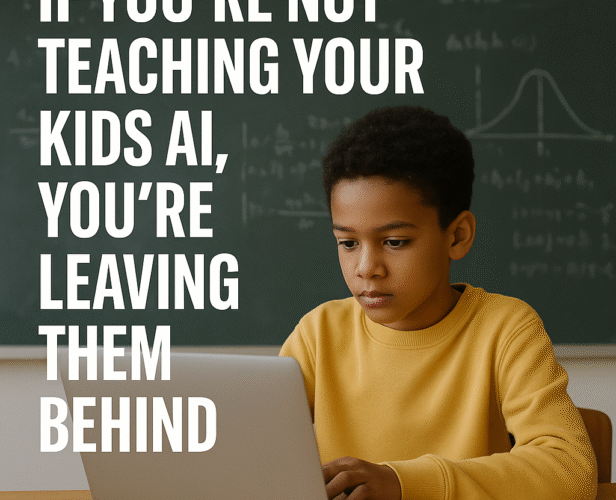
Are we preparing our families and our children for the kind of world that’s emerging?
Because the world our parents grew up in is not the world forming right now.
And the kids sitting in classrooms today?
They may grow up navigating an economy, a technology landscape, and a geopolitical reality that looks nothing like the one we were taught about in textbooks.
History Isn’t Just Something We Read Anymore 📚
For generations we studied history after it happened.
World War I
World War II
Cold War
Now something different is happening.
Our kids aren’t just reading history.
They’re living through it in real time.
And the question every parent, educator, and leader should be asking is simple:
Are we teaching them how to memorize the past…
Or how to understand the future?
Stay aware. 👁
Stay curious. 🧠
And most importantly…
Start asking deeper questions.
Because the world is shifting whether people are ready for it or not.
— IQ